May 19th, 2012
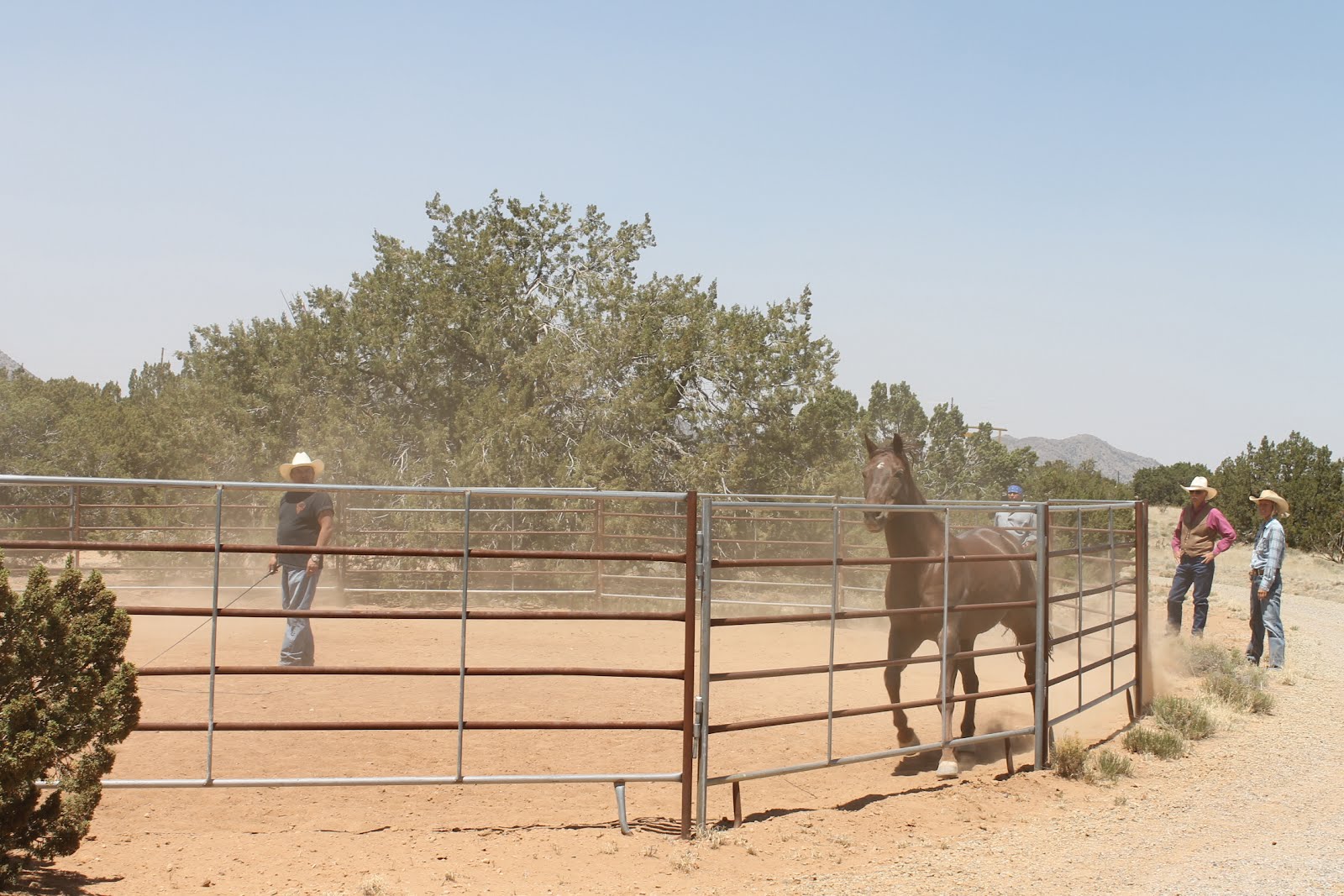
Was nice to wake up to see an article in the New Mexican about our Dear Friend and Program Partner Mr. Henry McKinley, so I just had to share it. Currently Mr. McKinley is teaching our most recent Cowboy Up! Graduate the ins and outs of roping - Thanks Henry!!!
A Wonderful Life: This cowboy's the real deal
Ana Pacheco | For The New Mexican
Posted: Saturday, May 19, 2012
At age 83, Henry McKinley is a member of a dying breed. "Ranchers can be cowboys, and so can those who participate in rodeos, but to find people who can train and shoe horses, run a ranch and compete in rodeos like me is a rarity these days," he said.
"Today, young people move to the city. They don't want to put in the years of hard work that it takes to run a ranch," McKinley said.
There are many personal and financial reasons that the younger generation no longer cares to spend their days toiling away at ranch work, but for McKinley, who was raised in such a setting, he'd have it no other way. His mother, Margaret Littlefield, was a registered nurse who came to New Mexico in 1928 to work for a wealthy family named Johnson, who were guests at the San Gabriel Ranch in Alcalde, a few miles north of Española. McKinley, who is the oldest of three children, said, "The first time I was on a horse was when I was an infant. My mother held me on a pillow as she rode around the ranch."
Later, McKinley spent his formative years at Ghost Ranch in Abiquiú, where his mother, and father, Jack McKinley, worked for Arthur Pack, whose family owned the sprawling ranch. It was at Ghost Ranch that McKinley found his calling in life as a cowboy -- and the love of his live. "I used to help my parents with their chores around the ranch and that's when I met Peggy Pack. She was 6 at the time and I was 41/2. We played together then and we're still playing together now," he said.
In 1979, after a divorce for McKinley and the death of Peggy Pack's first husband, the couple reunited. The union produced five children, seven grandchildren and four great-grandchildren.
Today, the elderly couple manages 30,000-acre Rancho Viejo, south of Santa Fe. Their days, which start at sunrise and end at sunset, are devoted to caring for their longhorn cattle. "Longhorn cattle are survivors of the fittest. More than a hundred years ago, after the Civil War, they were left by the Mexicans to fend for themselves. They're still going strong," McKinley said.
The biggest challenge for the couple these days is continual drought and overgrazing of the land. McKinley explained, "Since the Spaniards settled this part of the county more than three hundred years ago, their livestock had free range of the area, which has resulted in poor grazing conditions. We have to rotate the use of our property, so every three months our herd is moved to a different pasture in order for them to have an ample food supply. We have 10 windmills spread throughout the ranch that provide water, not only for the cattle, but for all of the wildlife in the area. Each day we take a drive to make sure that all of the windmills are working, because if you run out of water you're in trouble."
Henry McKinley was born in Lynn, Mass., in 1929. "My mother didn't trust the doctors out here so she went back home to have me. "We were there for six weeks and I haven't been back since, he said.
McKinley attended Española's McCurdy School and graduated from Roswell's New Mexico Military Institute in 1947. He spent two years in the military during the Korean War before attending college at the University of Arizona in Tucson. He graduated in 1952 with a degree in Range Management from New Mexico College of Agriculture and Mechanic Arts, today known as New Mexico State University.
He retired in 1980 from the Bureau of Indian Affairs, where he worked as an agricultural extension agent in range management. Since then he's not only managed his own ranch, but has participated in rodeo competitions throughout the state. For several years he held the New Mexico state title in calf roping. Although he's beginning to slow down a bit, two years ago he competed in a team-roping competition.
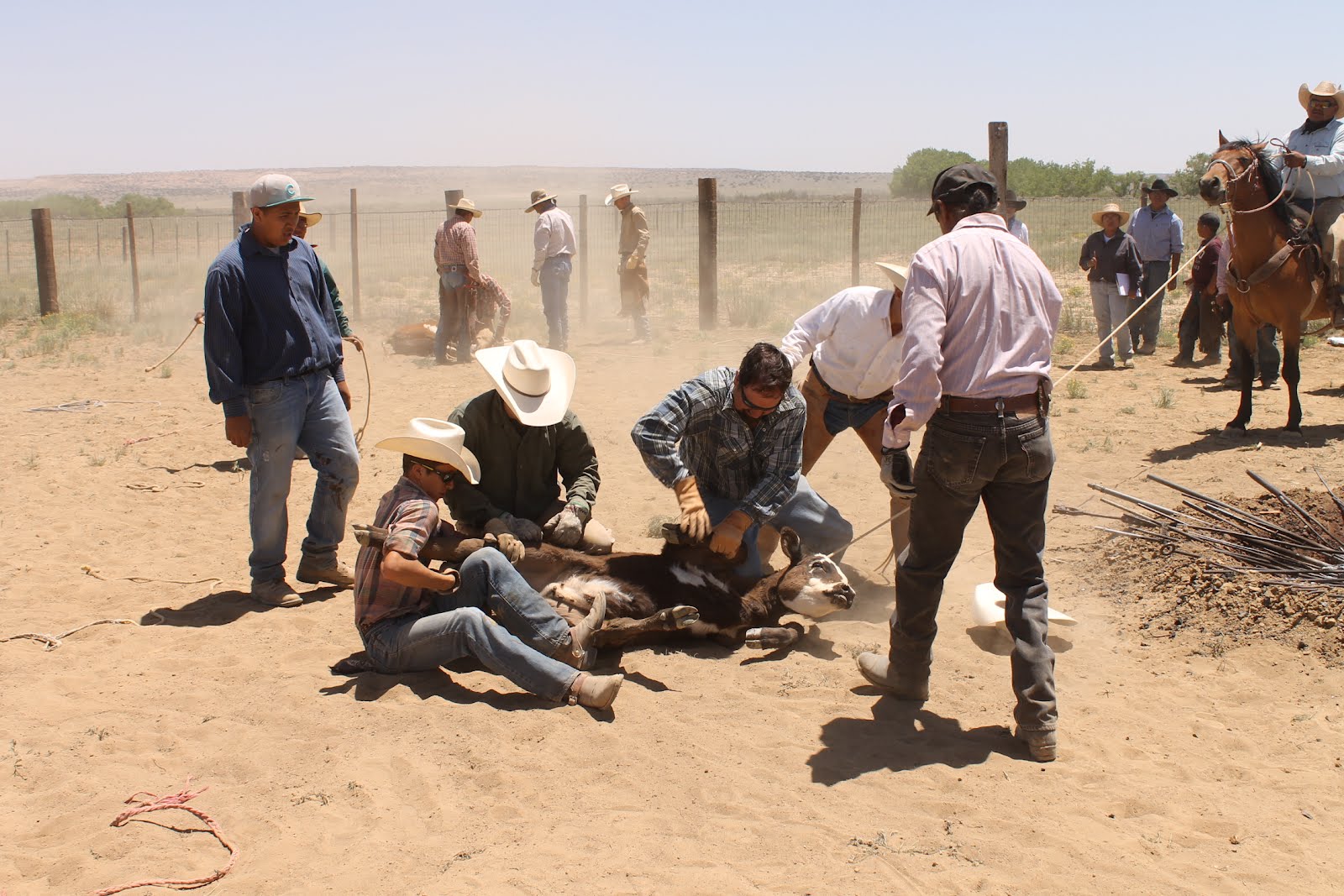
In June, McKinley will be busy branding all of his calves with the help of friends and neighbors. He said, "It'll be two long days of hard work, but after we're done I've promised to take everyone out to dinner."
Ana Pacheco's weekly tribute to our community elders appears every Sunday. She can be reached at
474-2800. Her book, J. Paul Taylor: The Man from Mesilla, was recently published by the Museum of New Mexico Press.